

Scanning platform and VibeDefend are two different things. The platform receives your repository when you ask it to scan. VibeDefend, the layer that plugs into your AI coding agent, runs on the developer’s machine: edits happen locally and only governance metadata comes back. This page describes the platform.
Temporary Container Approach
When you connect your repository to CybeDefend, we create a fresh container to clone and analyze your code. This container is isolated and used only for your specific scan. Once the scan is done:- The container is terminated.
- Any temporary copies of your code are destroyed immediately.
The Process at a Glance
CybeDefend securely clones your repository into an isolated container, performs a vulnerability analysis, extracts only security findings, and completely wipes the container and code once the scan is complete.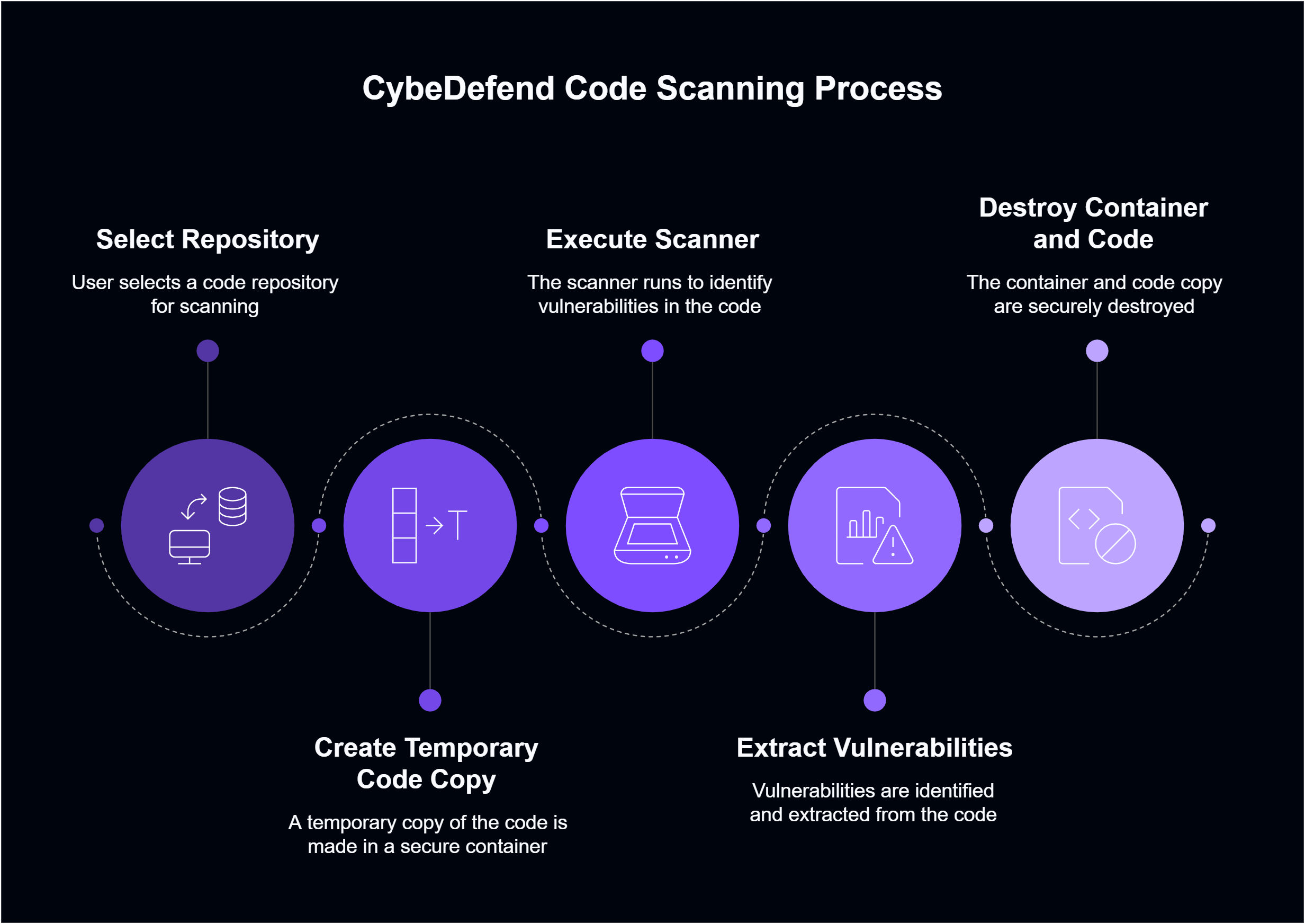
What we keep, precisely
The business-logic knowledge graph
If you enable the AI features that learn your repository’s own conventions, we build and keep a knowledge graph of your codebase. This is what lets the agent apply your business rules the next time it writes code. The graph holds file paths and a short description of what each file does. It does not contain your source code.- You can delete it at any time from the project settings.
- Disabling the AI features stops it being built in the first place, and no code is sent to the models.